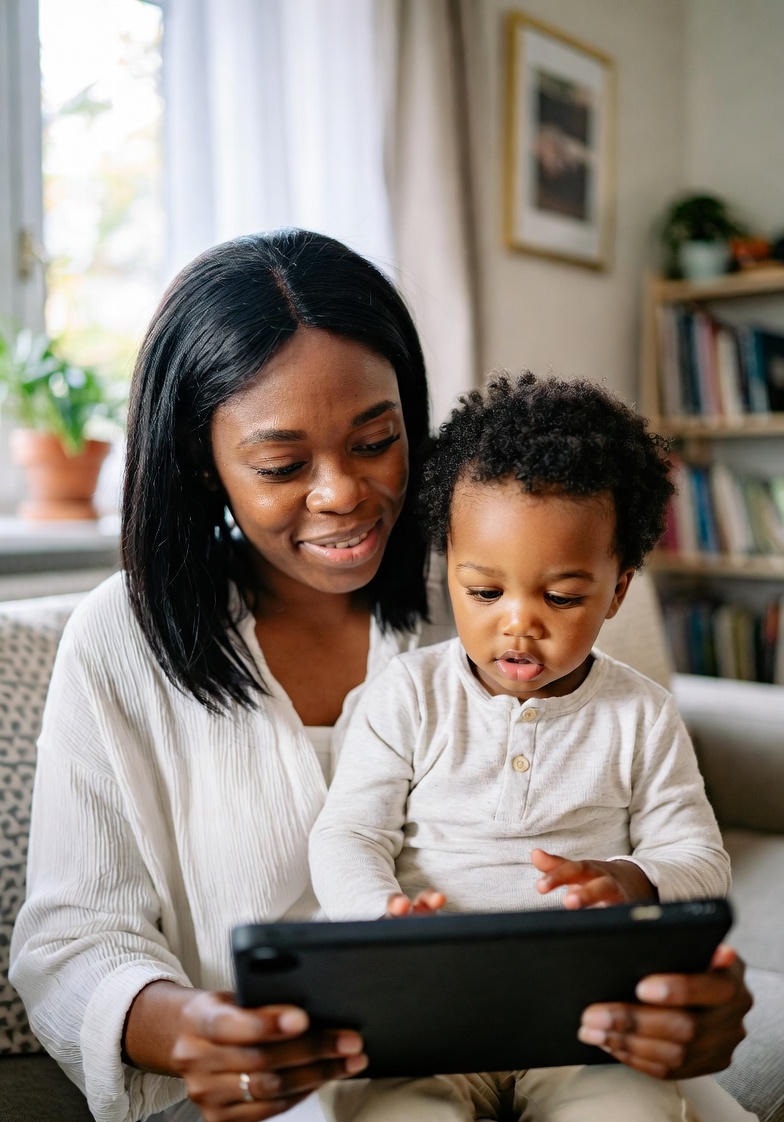
How to Help Your Child Love Mathematics from an Early Age
February 26, 2026
Many children naturally enjoy counting toys or sharing snacks — math is already part of their world. The secret is turning everyday moments into joyful discoveries...
...
Start with Play, Not Pressure — Use toys, blocks, and puzzles to explore shapes, patterns, and numbers without formal lessons.
Talk Math Naturally — Count steps while walking, compare sizes during bath time, or sort fruits by color and number.
Make It Relatable — Bake together (measuring = math!), point out numbers on signs, clocks, or money during shopping.
Celebrate Small Wins — Praise effort over "being smart" to build a growth mindset.
Introduce Simple Tools — Shape sorters for toddlers, pattern blocks for preschoolers, or free counting apps.
Avoid Negative Talk — Never say "math is hard" — model curiosity instead.
Conclusion: When math feels like play, children develop confidence that lasts a lifetime. Try one activity today and watch the spark!
Read More
10 Simple Tricks to Make Mathematics Easy for Primary School Students
February 27, 2026
Primary math doesn't have to be stressful — with these clever shortcuts and habits, your child can solve problems faster and with more confidence...
...
1. Use Finger Tricks for Multiplication (×9 = fingers method).
2. Break Big Numbers into Friendly Parts (e.g., 47 + 28 = 40+20 + 7+8).
3. Draw Quick Pictures or Models for Word Problems.
4. Master Number Bonds to 10/20 First.
5. Turn Fractions into Visuals (pizza slices or chocolate bars).
6. Practice Mental Math Games Daily (like "24 game" with cards).
7. Use Mnemonics for Formulas (e.g., PEMDAS: Please Excuse My Dear Aunt Sally).
8. Check Answers Backward (subtract to verify addition).
9. Play Estimation Games Before Calculating.
10. Create a "Math Wall" of Tricks at Home.
Conclusion: Small tricks build big confidence — pick 2–3 to try this week!
Read More
Step-by-Step Guide to Teaching Percentages to Kids
February 28, 2026
Percentages sound tricky, but they're really just "parts out of 100." Here's a simple roadmap to make them click for your child...
...
Step 1: Explain "Percent = Per Hundred" — Show 100 squares grid; shade 25 = 25%.
Step 2: Connect to Real Life — Test scores, discounts, pie charts.
Step 3: Use Visuals — 10×10 grids, fraction bars, or food (100g chocolate, 30% dark).
Step 4: Hands-On Activity — "Percent Hunt" — find 50% of toys or snacks.
Step 5: Simple Calculations — 10% is easy (move decimal), then 5%, 20%, etc.
Step 6: Word Problems — "What is 20% off ₦500?" with drawings.
Step 7: Games — Spinner or dice to generate percentages.
Conclusion: Once percentages feel visual and familiar, the fear disappears.
Read More
Why Many Children Fear Mathematics – And How to Fix It
March 1, 2026
Math anxiety is real — and surprisingly common — but the good news is that parents and teachers can help turn fear into confidence...
...
Common Causes: Weak early foundations, timed pressure, negative comments ("math is hard"), comparison to peers.
Signs to Watch: Avoidance, frustration tears, saying "I'm bad at math."
Fix #1: Normalize Mistakes — Share your own math stories and how you learned.
Fix #2: Build Success Early — Start with easy wins to rebuild confidence.
Fix #3: Remove Time Pressure — Practice without clocks at first.
Fix #4: Use Games & Hands-On Tools — Reduce "school-like" stress.
Fix #5: Praise Effort & Strategies — "You tried different ways — great thinking!"
Conclusion: With patience and positivity, most children overcome math fear completely.
Read More
Fun Ways to Teach Profit and Loss to Primary School Pupils
March 2, 2026
Profit and loss isn't just for business class — it's part of everyday choices like buying snacks or running a small sale! Turn it into exciting play so your child truly understands...
...
Lemonade Stand or "Zobo" Sale — Help your child set up a simple drink stand at home or for family/neighbors. Track costs (lemons/sugar/water or zobo ingredients) vs. what they charge per cup — calculate profit or loss at the end.
Toy Shop Role-Play — Use pretend money (or real small change) to "buy" toys low from one sibling and "sell" higher to another. Discuss why selling higher creates profit.
Snack Shop Game — Buy a pack of biscuits in bulk, divide and "sell" pieces to family members at a small markup. Count money in vs. out to see profit.
Board Games with Money — Play simplified versions of Monopoly, PayDay, or local shop games to experience earning, spending, and profit/loss naturally.
Visual "Money Flow" Chart — Draw arrows: costs → sales → profit (positive) or loss (negative). Use real examples like family market shopping discounts.
Garage/Car Boot Sale Simulation — Gather old toys/clothes, price them, "sell" to parents/siblings, then calculate if there's profit after any "costs" like cleaning.
Conclusion: Hands-on activities make profit and loss feel real and fun — children learn best when they experience earning (even pretend) money themselves. Try a mini-sale this weekend!
Read More
Best Online Math Practice Methods for Nigerian Students
March 3, 2026
With phones and data so common now, Nigerian primary pupils can practice math anytime, anywhere. Here are the most effective (and mostly affordable/free) online methods tailored for our curriculum...
...
uLesson App — Nigerian-focused with videos, quizzes, and live classes aligned to the national curriculum — great for daily practice and WAEC/JAMB prep later.
Khan Academy (Free) — Excellent for foundational math (place value, fractions, etc.) with interactive exercises and progress tracking — works well offline after download.
Prodigy or SplashLearn — Fun adaptive games where math problems feel like adventures — great for building speed and confidence without feeling like "study."
WAEC e-Learning Toolkit (Free) — Official past questions and explanations for math topics — ideal for upper primary pupils preparing for exams.
Matific or BuzzMath — Interactive lessons and games covering topics like percentages and geometry — many free trials or school access options.
Daily WhatsApp Math Challenges — Join teacher/parent groups for quick daily problems or use free Nigerian math quiz channels/apps.
Short Routine Tip: 15–20 minutes daily mixing games (for fun) + curriculum practice (for school alignment).
Conclusion: Consistency beats long sessions — choose 1–2 platforms your child enjoys and watch their skills (and love for math) grow quickly!
Read More
How Interactive Math Games Improve Problem-Solving Skills
March 4, 2026
Math games aren't just entertainment — research shows they build stronger reasoning, strategy, persistence, and creative thinking in children...
...
Immediate Feedback & Trial-and-Error — Games let kids try solutions instantly and see results, teaching them to adjust strategies without fear of "wrong" answers.
Evidence from Studies — Reviews show game-based learning significantly boosts problem-solving, critical thinking, and motivation compared to worksheets alone.
Better Persistence — When puzzles get hard, games encourage "one more try" — building grit for tough word problems or exams.
Flexible Thinking — Strategy games (like Prodigy battles or board games) require planning multiple steps ahead and adapting to changes.
Spatial & Logical Skills — Puzzle or building games improve visualizing solutions — helpful for geometry, fractions, and measurement.
Collaboration Bonus — Multiplayer games teach discussing ideas and learning from peers.
At-Home Favorites — Prodigy, board games like 24 or Sudoku, or even free card/dice challenges.
Conclusion: Just 15–30 minutes of smart game play several times a week can dramatically improve how children tackle real math problems — make it part of homework fun!
Read More
Understanding Place Value Made Simple for Kids
March 5, 2026
Place value is the secret code behind big numbers — teach it with visuals and hands-on fun, and your child will master addition, subtraction, and beyond with ease...
...
Use Base-10 Blocks or "Money Bundles" — Show ones (single cubes/₦1 coins), tens (rods/₦10 notes), hundreds — build numbers physically.
House Analogy — Ones live in the "units flat," tens in the "tens house," hundreds in the "hundreds mansion" — position changes value.
Arrow/Place Value Charts — Write numbers with arrows pointing to each digit's value (e.g., 4 → 400, 5 → 50).
"Build & Read" Game — Give straws/beans/matches; child bundles into tens and reads the number.
Fix Common Mix-Ups — Show why 607 ≠ 670 (the zero placeholder matters!).
Everyday Practice — Read house numbers, bus plates, money amounts (₦4,567 = four thousand...).
Expanded Form Fun — Write 3,482 as 3000 + 400 + 80 + 2 and build it.
Conclusion: Strong place value early on prevents so many later mistakes — spend a week playing with blocks or money, and watch the "aha!" moments happen.
Read More
How to Prepare Your Child for Mathematics CBT Exams
March 6, 2026
Computer-Based Tests reward quick thinking and accuracy — prepare calmly with these focused, low-stress strategies so your child walks in confident...
...
Get Familiar with Screens — Practice similar CBT interfaces (many free mock apps or school platforms) so clicking answers feels normal.
Short Timed Drills — Start with 10–15 min sessions building to full papers — use timers gently to build stamina.
Target Weak Spots — Review past questions; focus extra practice on frequent errors like fractions or word problems.
Mental Math Speed — Daily quick-fire games for addition/subtraction/multiplication to save time on basics.
Read Carefully — Teach highlighting key words (total, difference, each) and underlining numbers.
Review Immediately — After practice, discuss every mistake — turn errors into learning.
Calm Techniques — Practice deep breathing before starting; remind them "it's okay to skip and return."
Conclusion: Smart, consistent prep + a positive mindset usually leads to better scores — start small now and build up gradually.
Read More
Top 20 Common Mistakes Children Make in Mathematics
March 7, 2026
Most "careless" math mistakes actually come from tiny confusions — spot these top 20 early, explain why they happen, and help your child fix them for good...
...
1. Forgetting to carry/borrow in addition/subtraction.
2. Misreading the question in word problems.
3. Thinking bigger denominator = bigger fraction (e.g., 1/8 > 1/4).
4. Believing multiplication always makes numbers bigger (ignores fractions <1).
5. Mixing up + and – signs.
6. Not checking units or writing final answer sentence.
7. Misaligning columns in long multiplication/division.
8. Forgetting decimal point placement.
9. Confusing place value (e.g., 0.6 vs 0.06).
10. Rounding incorrectly.
11. Rushing without planning steps.
12. Skipping showing working.
13. Misunderstanding "of" in fractions (e.g., 1/2 of 20).
14. Adding instead of subtracting (or vice versa) in change problems.
15. Forgetting zero as placeholder.
16. Incorrect regrouping in subtraction.
17. Misapplying formulas without understanding.
18. Not estimating first to check if answer is reasonable.
19. Confusing area vs. perimeter.
20. Careless copying numbers from question.
How to Fix: Use drawings, checklists, explain why the mistake happens, and practice the correct way immediately.
Conclusion: Turning these common slip-ups into "learning moments" builds stronger mathematicians — review one or two a week with fun examples.
Read More
How Parents Can Support Math Learning at Home
March 8, 2026
Parents play a powerful role in building math confidence — simple daily support at home can make a huge difference without needing to be a math expert...
...
Create a Positive Math Environment — Talk positively about math; avoid saying "I'm bad at math" in front of your child.
Incorporate Math into Daily Routines — Count stairs, measure ingredients while cooking, or compare sizes during shopping.
Provide Hands-On Materials — Use everyday items like beans, buttons, or LEGO for counting, sorting, and patterns.
Play Math Games Together — Board games (Monopoly, Snakes & Ladders), card games, or free apps like Prodigy build skills playfully.
Help with Homework Wisely — Guide rather than give answers; ask questions like "How did you get that?" to encourage thinking.
Read Math-Related Books — Stories with numbers, shapes, or patterns (e.g., "The Doorbell Rang" or local Nigerian math storybooks).
Be Patient and Celebrate Effort — Praise persistence ("You kept trying different ways!") to foster a growth mindset.
Conclusion: Consistent, fun support at home turns math from a school subject into a natural part of life — start with one small habit today!
Read More
The Importance of Strong Math Foundations in Primary Education
March 9, 2026
A solid math base in primary years is like building a strong house foundation — it supports all future learning and prevents gaps later on...
...
Builds Confidence & Reduces Anxiety — Early mastery prevents fear and the "I'm not a math person" mindset.
Supports All Other Subjects — Math skills help in science (measuring experiments), economics (money concepts), and even art (patterns & symmetry).
Develops Critical Thinking & Problem-Solving — Early number sense, patterns, and logic lay the groundwork for reasoning in any field.
Prevents Learning Gaps — Weak basics (e.g., poor place value) cause struggles in fractions, algebra, and beyond.
Prepares for Future Exams & Careers — Strong primary math leads to better performance in BECE, WAEC, JAMB, and STEM fields.
Encourages Lifelong Learning — Children who understand "why" math works stay curious and adaptable.
Conclusion: Investing time in primary math foundations pays off for years — focus on understanding over rote memorization for lasting success.
Read More